


Let’s be honest…no leadership team is still debating whether engagement matters.
That ship has sailed.
The data is overwhelming. Gallup continues to show that engaged teams drive higher profitability, productivity, and lower turnover.
So why does investment still stall?
It’s not a belief problem.
It’s a proof problem.
Leaders don’t need convincing that engagement works.
They need to see how it works here—in their business, on their numbers, this year.
That gap—between belief and evidence—is where most engagement strategies fall down.
The market has moved on from belief
There was a time when engagement could sit comfortably as a “nice-to-have.”
A culture piece. A values piece. Adjacent to performance.
Not anymore.
Gartner’s latest research shows 89% of executives say they’re advancing human sustainability—yet only 41% of employees feel it.
That’s not a perception issue.
That’s a credibility gap.
At the same time, Deloitte continues to link strong culture directly to business performance.
So the expectation is clear:
Engagement isn’t progressive.
It’s baseline.
And when expectations aren’t met, they don’t stay neutral—they turn into risk.
The real problem: engagement is still being sold wrong
Engagement doesn’t struggle because it lacks value.
It struggles because it lacks translation.
Boards don’t buy ideas.
They buy outcomes.
This is where psychology kicks in.
Humans are wired for relevance and immediacy—we prioritise what feels close, tangible, and personally impactful. Abstract stats about “global productivity” don’t trigger action. A clear hit to this year’s margin does.
-
A CFO doesn’t move on industry benchmarks
-
They move on cost, risk, and return
-
A CEO doesn’t react to engagement scores
-
They react to revenue impact and performance drift
The issue isn’t weak evidence.
It’s disconnected storytelling.
The shift that changes everything
This isn’t about new frameworks.
It’s about reframing.
-
Talk about culture → sounds like cost
-
Talk about performance → sounds like investment
Same thing. Completely different reaction.
Because at its core, engagement isn’t a programme.
It’s a behavioural system.
And behaviour is where psychology does the heavy lifting.
High-performing organisations don’t chase outcomes directly.
They shape the behaviours that create those outcomes.
Recognition.
Feedback.
Autonomy.
Clarity.
Progress.
These aren’t “nice-to-haves.” They’re psychological drivers—rooted in motivation theory (think reinforcement, intrinsic motivation, and habit formation).
Ignore them, and engagement feels abstract.
Design for them, and performance becomes predictable.
The missing layer: behavioural visibility
Here’s where most organisations are flying blind.
They track lagging indicators:
-
Turnover
-
Profit
-
Engagement scores
But they can’t see the behaviours driving them.
That’s a problem.
Because by the time a KPI shifts, the damage is already done.
From a behavioural science perspective, this is classic feedback delay—when the signal comes too late to influence the behaviour that caused it.
High-performing organisations flip this.
They focus on leading indicators:
-
Are managers recognising regularly?
-
Is feedback happening in real time?
-
Are people seeing progress?
Then they make those behaviours:
-
Visible
-
Measurable
-
Reinforced
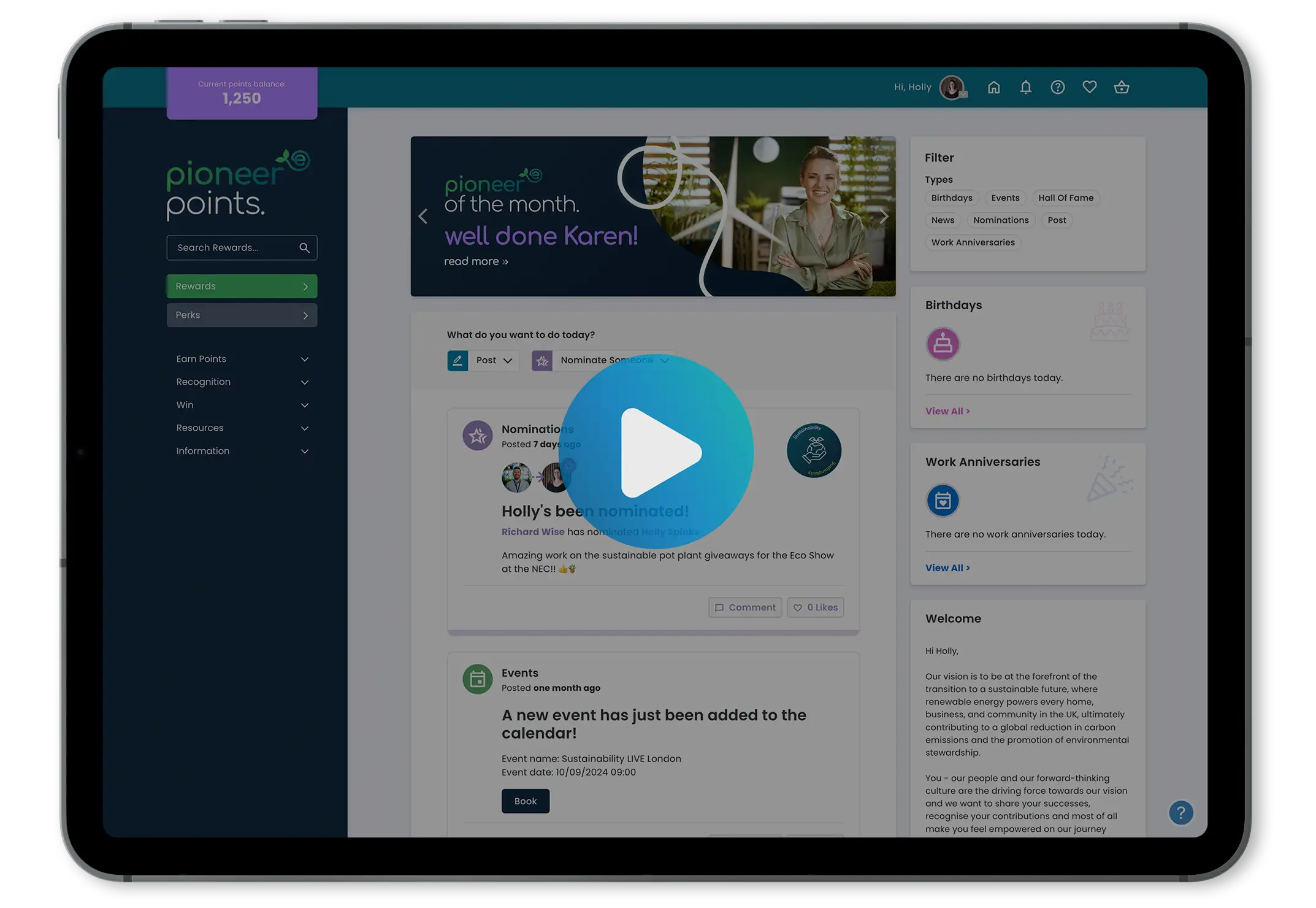
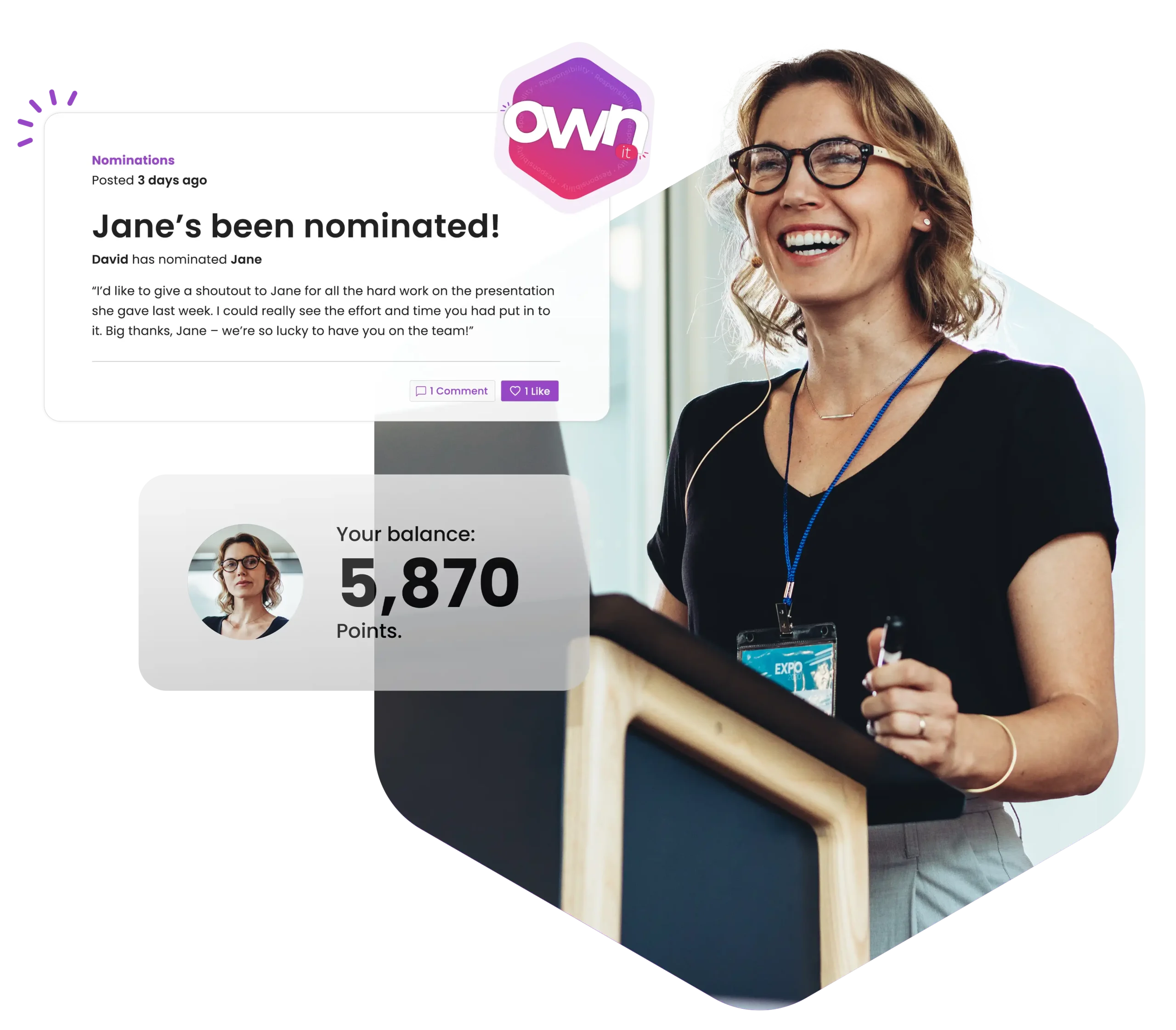
This is where platforms like loyalty and engagement tech come into play. Not as reward tools.
As behavioural infrastructure.
They close the loop:
-
Action → visibility → reinforcement → repetition
Without that loop, behaviour fades. With it, behaviour sticks.
The “Instagram effect” at work
There’s another dynamic quietly undermining engagement.
The gap between what organisations say and what employees experience.
Leaders talk about values.
Employees experience inconsistency.
Leaders launch initiatives.
Employees see fragmentation.
Psychologically, this creates cognitive dissonance—when reality doesn’t match expectation. And when that happens, trust erodes fast.
This is the workplace version of a filtered feed:
Looks great on the outside. Feels different on the inside.
And once trust drops, engagement follows.
Because people don’t engage with what’s promised.
They engage with what’s consistently reinforced.
Why engagement still gets stuck in HR
Here’s a structural issue:
Engagement is still treated as an HR initiative. That’s the wrong frame.
Engagement is a business outcome.
When it sits in HR:
-
It’s programmes
-
Surveys
-
Comms
When it sits at leadership level:
-
It’s performance
-
Growth
-
Risk
That shift matters. Because ownership drives investment.
Until:
-
Sales see its impact on conversion
-
Commercial teams see its impact on retention
-
Finance sees its impact on margin
…it will continue to be deprioritised.
The business case that actually lands
If you want engagement funded, it needs to be built like any other commercial case.
Three steps:
1. Risk (loss aversion)
Humans are wired to avoid loss more than pursue gain.
So start there.
What’s the cost of doing nothing?
-
Losing top performers
-
Productivity drag
-
Customer experience decline
Make it real. Make it measurable.
2. Opportunity (motivation)
What changes if behaviour shifts?
-
Better retention
-
Stronger performance
-
More consistency
This is where you show upside—but grounded in behaviour, not aspiration.
3. Commercial impact (decision trigger)
Translate it into money.
-
Revenue
-
Margin
-
Cost
Because this is the moment it stops being a narrative—and becomes a decision.
Data tells. Stories sell.
One last piece—often overlooked.
Data informs.
Stories persuade.
And persuasion is psychological.
Leaders don’t just process numbers.
They interpret meaning.
So instead of saying:
“Engagement dropped 4%”
Say:
“What does that 4% mean for revenue, customer experience, and attrition over the next 12 months?”
Make the future visible. Because when clarity is low, decisions default to cost-cutting.
The questions leaders should be asking now
If engagement is a commercial lever, not a cultural side project, the questions need to evolve:
-
What behaviours are we actually reinforcing?
-
Can we see the actions that drive performance—or just the outcomes?
-
Where’s the gap between what we say and what people experience?
-
How directly can we link engagement to revenue, retention, and margin?
-
Are we measuring what matters—or just what’s easy?
These aren’t operational questions. They’re strategic.
Engagement isn’t the outcome
The companies that win won’t be the ones with the highest engagement scores. They’ll be the ones who understand what those scores signal.
Engagement is feedback.
A signal that:
-
Behaviour is aligned
-
Expectations are clear
-
Performance is being reinforced
When that signal is visible and tied to commercial outcomes, everything changes. Engagement stops being a conversation. It becomes a growth strategy.
Because when behaviour is designed with intent, people respond. And when people respond consistently, performance follows.
Predictably.