


And why employee engagement must anchor every decision you make
As we move through 2026, workplace culture is no longer something organisations can afford to treat as a background concept. Employee expectations have shifted rapidly—driven by hybrid work, economic pressure, and the accelerating impact of AI. People want clarity, fairness, genuine recognition, and a sense of belonging. Yet despite these rising expectations, global data continues to highlight the same pattern: only 21% of employees feel engaged, and manager engagement has slipped from 30% to 27%, creating inconsistent cultural experiences across teams.
One of the biggest cultural challenges today isn’t dissatisfaction—it’s disconnection. In a hybrid world, engagement often fades not because something bad happened, but because nothing happened at all. No recognition, no check-ins, no visibility. Culture erodes in silence. And this is where HR’s role becomes essential: designing experiences that are intentional, consistent, and human.
Culture Is Now a Team-Level Experience
One of the most overlooked shifts in today’s workplace is the rise of micro-cultures. Employees experience the organisation through their immediate team long before they experience it organisationally. This means:
-
Managers have become the primary culture carriers
-
Daily behaviours matter more than poster values
-
Small inconsistencies add up quickly
When manager engagement is low, micro-cultures fracture. When leaders are supported and aligned, culture strengthens at the point where it’s most lived.
AI Anxiety Is Quietly Undermining Engagement
While digital transformation is accelerating, communication about it hasn’t kept pace. Studies show that nearly 40% of employees feel uncertain about how AI will impact their role, and only one in five believe their employer has explained these changes clearly. That uncertainty shows up in engagement scores—employees with high AI anxiety report significantly lower trust and motivation.
This is a cultural issue, not a technological one. In 2026, culture requires not just implementing AI, but explaining it, demystifying it, and supporting employees through it.
Recognition Matters More Than Workload
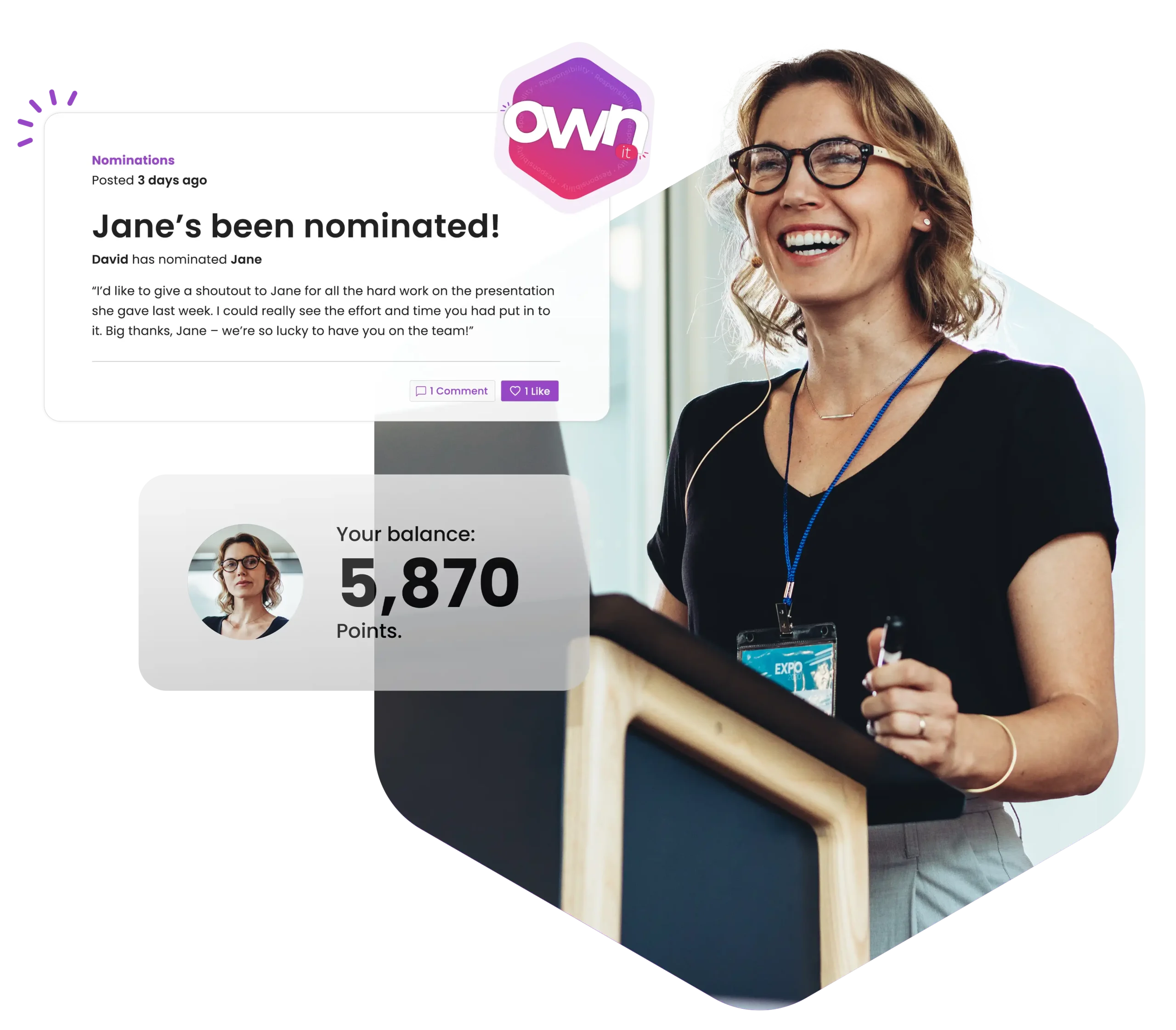
Recognition remains one of the most powerful yet undervalued cultural levers. Only 69% of employees feel recognised, but what’s less widely known is that feeling unrecognised contributes more to burnout than workload itself. People can manage busy periods. What they struggle with is invisibility. That’s why simple, frequent recognition moments, especially in hybrid teams, carry disproportionate impact.
A quick message, a public thank-you, a visible shout-out: these moments reinforce belonging, effort, and progress in a year where change is constant.
Hybrid Work Has Created Visibility Inequality
Hybrid work has solved many challenges, but it has created a subtle cultural divide: visibility inequality. Remote employees tend to receive fewer spontaneous acknowledgements, have fewer “in-passing” conversations, and lag behind in promotion conversations unless criteria are made explicit and fair.
This isn’t intentional, but it is structural—and it’s becoming one of the reasons many employees feel disconnected. Culture now has to be engineered to be location-proof.
Development Expectations Are Rising
Another trend shaping culture this year is how differently employees approach career development. Interestingly, the most engaged employees today are career switchers, not long-tenured staff. They feel more intentional, more energised, and more aligned with purpose. This is a signal: organisations need to “re-recruit” long-standing employees—offering fresh growth, renewed purpose, and visible progression. Without this, engagement stagnates even in otherwise strong cultures.
Communication Shapes Culture More Than Strategy
Employees are navigating more change than ever, and what determines their experience isn’t the change itself—it’s how clearly it’s explained. Transparent, frequent, straightforward communication builds trust, reduces anxiety, and helps employees understand the direction of travel.
This is why continuous listening—short pulses, informal feedback, regular check-ins—has replaced the traditional annual engagement survey. Culture doesn’t decline suddenly; it drifts quietly. Regular listening helps HR intervene before issues grow.
What Strong Culture Looks Like in 2026
Across industries, the cultures that succeed share a few defining qualities:
-
Clarity in expectations and communication
-
Connection across hybrid and dispersed teams
-
Growth that feels accessible and meaningful
-
Leaders who model values daily
-
Adaptability supported by open, honest dialogue
But beyond these foundations, the organisations that truly stand out are the ones addressing the hidden drivers of culture:
-
The influence of micro-cultures
-
The rise of AI-related uncertainty
-
The impact of visibility inequality in hybrid work
-
The wellbeing effect of recognition
-
The engagement gap between new joiners and long-tenured staff
-
The strain of engagement paralysis managers are facing
-
The importance of belonging, the strongest predictor of retention yet one of the least measured
These factors are not often highlighted, but they are shaping culture more powerfully than ever.
The Bottom Line
Culture is no longer a set of values on a wall—it’s a series of everyday moments that shape how people feel, behave, and choose to contribute. Engagement is not a metric; it’s the energy people bring to their work when they feel seen, supported, and connected.
In 2026, culture must be intentional, and engagement must be continuous. The organisations that design both deliberately will be the ones that thrive far beyond this year.
If you’d like to explore these themes further, especially how culture, recognition and behavioural psychology intersect in real workplaces—we’ve recorded a podcast that dives deeper into what truly drives employee motivation today. It’s an insightful conversation for HR leaders who want to put these ideas into action: 👉 Watch the episode here.