



Written by: Lauren Gardner
If you work in manufacturing or the builder merchant world, you already know the truth: the market is loud, busy, competitive, and increasingly… well, chaotic.
Everyone’s fighting for attention. Everyone’s claiming “quality”, “service”, and “availability”. And everyone’s customers are scrolling, comparing, switching, and buying in entirely new ways. As a growth marketer, I’ve spent enough time in B2B marketing to see the same pattern repeatedly: We’re all pushing hard for growth, but most businesses still aren’t using their biggest growth lever, customer loyalty.
Here’s the simple shift loyalty creates. It doesn’t just reward your best customers, it moves the middle, turning occasional buyers and fence-sitters into your most valuable, repeat-driven loyalists.
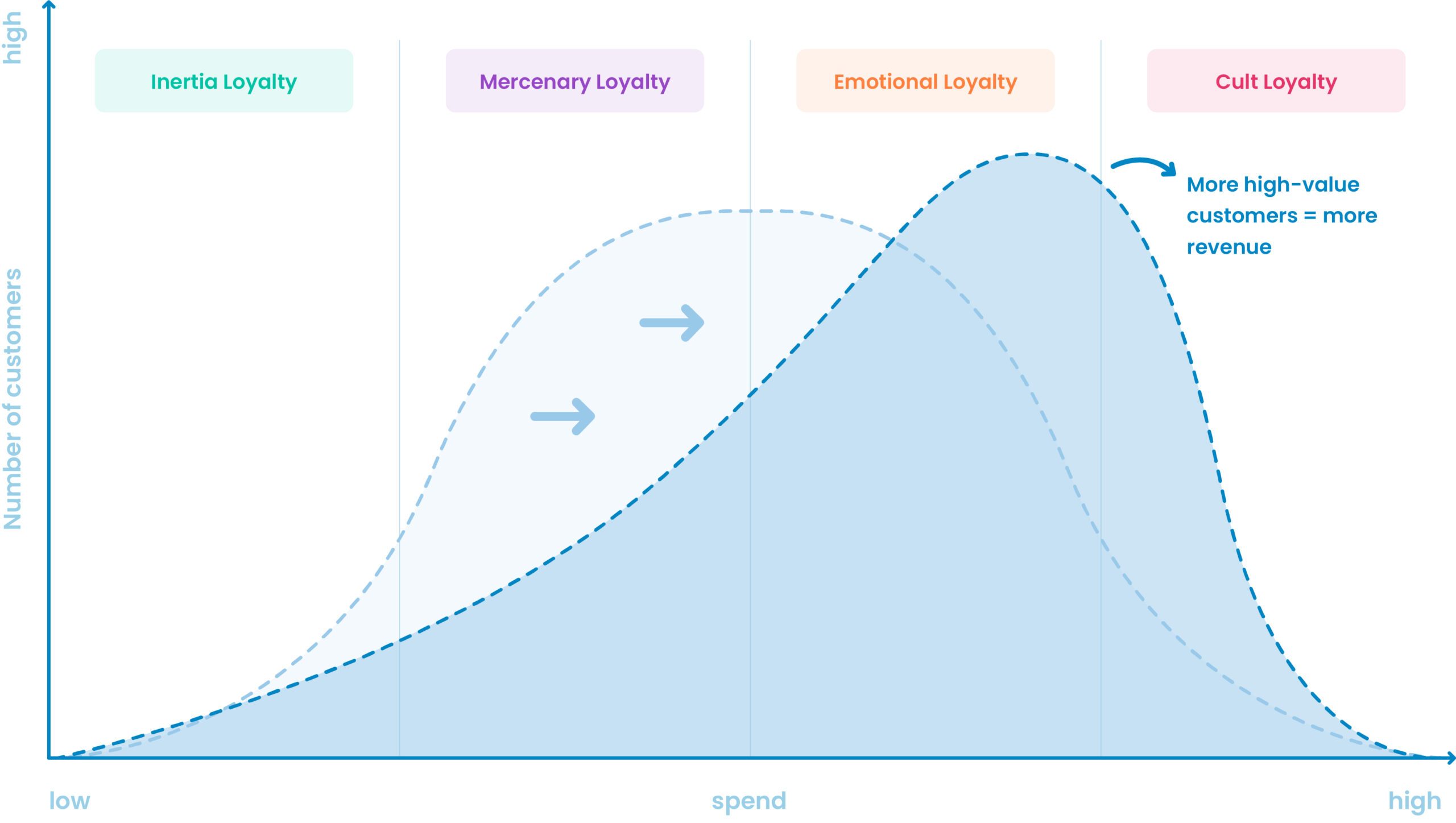
Your biggest growth lever is turning ‘sometimes’ customers into ‘always’ customers.
Let’s get into why this matters, and why now is the perfect time to rethink how you’re building real loyalty with your trade customers.
 The Real Competition Isn’t Other Brands, It’s Information Overload
Let’s be honest: no one in this industry is short of marketing. Between product emails, promotions, brochures, social ads, videos, and the occasional “just checking in” call… your customers are being hit from every angle.
And here’s the kicker: your competitors are doing the same thing.
Everyone is sending the same types of messages, using the same channels, at roughly the same time of year… which means it all blends into one big blur of “Seen it. Got it. Probably ignored it.” It’s not that customers don’t care. It’s that they literally can’t keep up. So, if your marketing looks and sounds just like everyone else’s, then you’re not just competing with other brands… you’re competing with your customer’s inbox tolerance level. A loyalty strategy helps you slice through that noise because it replaces generic “Hey, notice me!” marketing with relevant, personalised, behaviour-led communication.
And relevance? That’s the real superpower.
 When You Understand Behaviour, You Can Influence It
A big challenge in trade marketing today is the huge gap between what brands think customers want… and what they need.
Most purchase patterns are a mystery. Merchants and manufacturers know what is being bought, but not why. And without knowing the “why”, your marketing becomes one big, educated guess.
A loyalty strategy gives you the insight you wish you had last year:
- Who’s buying more (or less)
- Who’s drifting away
- What products trigger repeat spend
- What behaviours can be influenced with the right incentive
Imagine knowing all that… and then using it to send people the right message at the right time with the right motivation. That’s not just good marketing, that’s unfair advantage marketing.
 New Business Is Great, But Existing Customers Are Your Secret Growth Engine
New customers are like dating: exciting, unpredictable, a bit expensive, and occasionally disappointing. Existing customers? They’re the long-term relationship where you actually make money.
But here’s what’s happening across the industry:
Businesses are investing heavily in acquisition…
and quietly losing customers out the back door.
A loyalty-led strategy helps you balance the equation:
- More repeat purchases
- More frequent orders
- Dormant customers reactivated
- More product categories explored
- And yes, more referrals too
It’s the difference between chasing growth and compounding it.
 Discounts Feel Easy… But They Can Get Expensive Fast
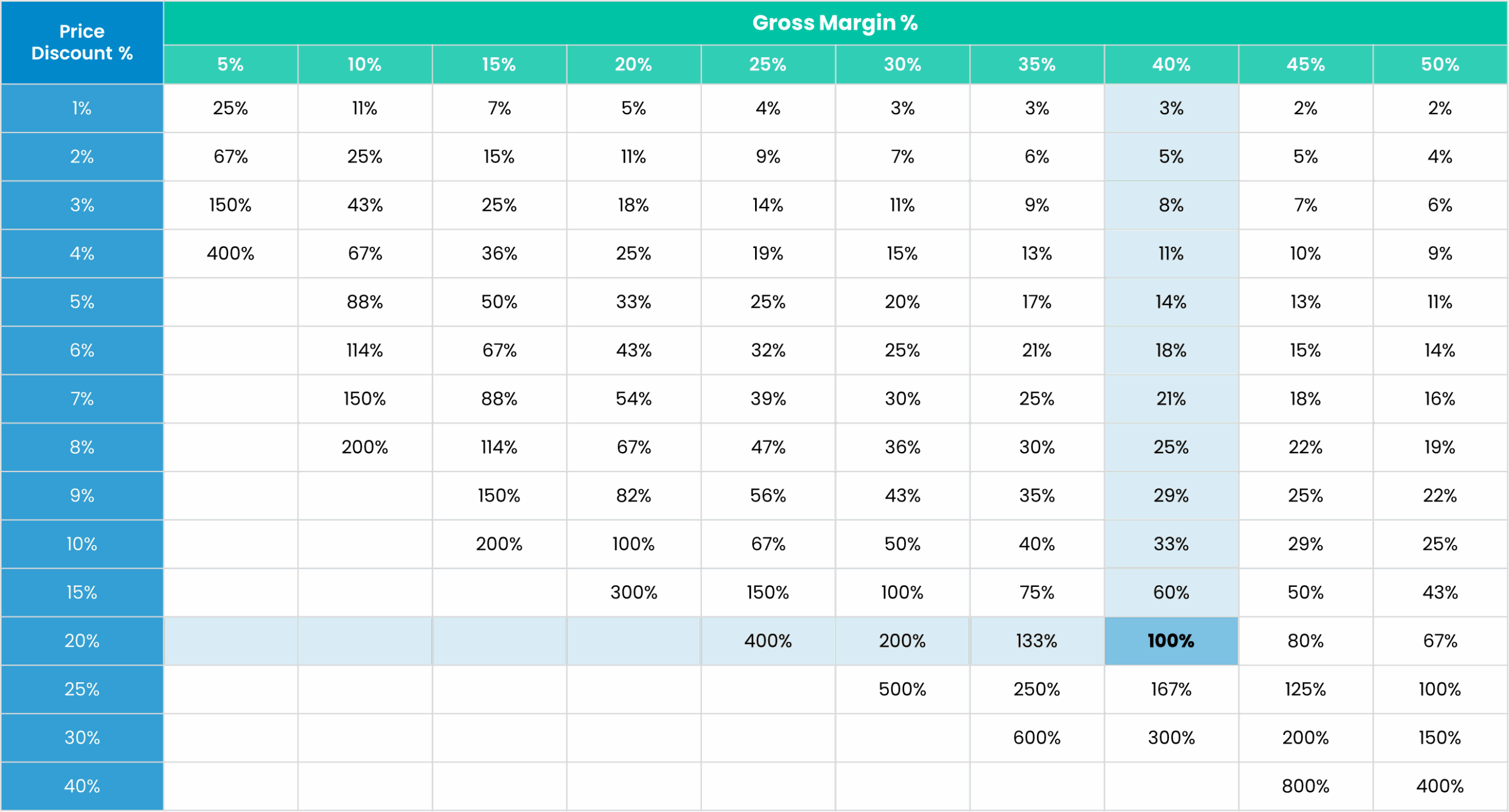
Discounts can feel like the quickest way to win attention, but they’re also one of the fastest ways to damage profit if you’re not careful. The table below shows the extra sales volume you’d need just to break even after a discount, depending on your gross margin. And the maths gets ugly fast. The lower your margin, the harder it is to recover what you’ve given away.
For example, at a 40% gross margin, offering a 20% discount means you’d need a 100% increase in sales, literally double the volume, just to land on the same profit as before. That’s why discounting shouldn’t be the default lever. If the uplift isn’t realistic or sustainable, you’re trading long-term value for a short-term spike.
 Loyalty Isn’t Just Rewards, It’s a Strategic Growth Framework
One of the biggest misconceptions I see is businesses thinking loyalty means sending people a branded mug once a year and hoping for the best.
Loyalty done right is much bigger. Think of it like scaffolding for your entire marketing strategy.
A proper loyalty framework includes:
✔ Smart customer segmentation (So you stop sending every email to everyone.)
✔ Value exchange design (Trade customers aren’t always motivated by points. Recognition, tools, exclusives, or access can matter more.)
✔ Behaviour-based incentives (Reward the behaviours you want to see more of, not the ones they’d do anyway.)
✔ Data that tells you what’s working (Or what’s slowly dying in the background.)
✔ Personalised comms that people actually open (No more hoping and praying for click-throughs.)
It’s less “marketing tactic” and more “growth engine”.
 Here’s the Truth: Loyalty Is Becoming a Survival Strategy
The market isn’t getting any quieter. Competition isn’t getting any gentler. Customers aren’t becoming any easier to understand.
But businesses that invest in loyalty are seeing:
- Stronger relationships
- More predictable revenue
- Better customer understanding
- Higher retention
- And a real sense of community around their brand
And in a market where pretty much everyone sells similar products, relationships are the only real differentiator left.
Final Thought: Loyalty Isn’t a Nice-to-Have, It’s Your Most Sustainable Route to Growth
If you want to grow this year, really grow, focus on loyalty. Because when you understand your customers, engage them with purpose, and give them a meaningful reason to keep choosing you… you’re not just boosting sales.
You’re building something future-proof. And in today’s market? Future-proof sounds pretty good.
Ready to Build a Loyalty Strategy That Actually Moves the Middle?
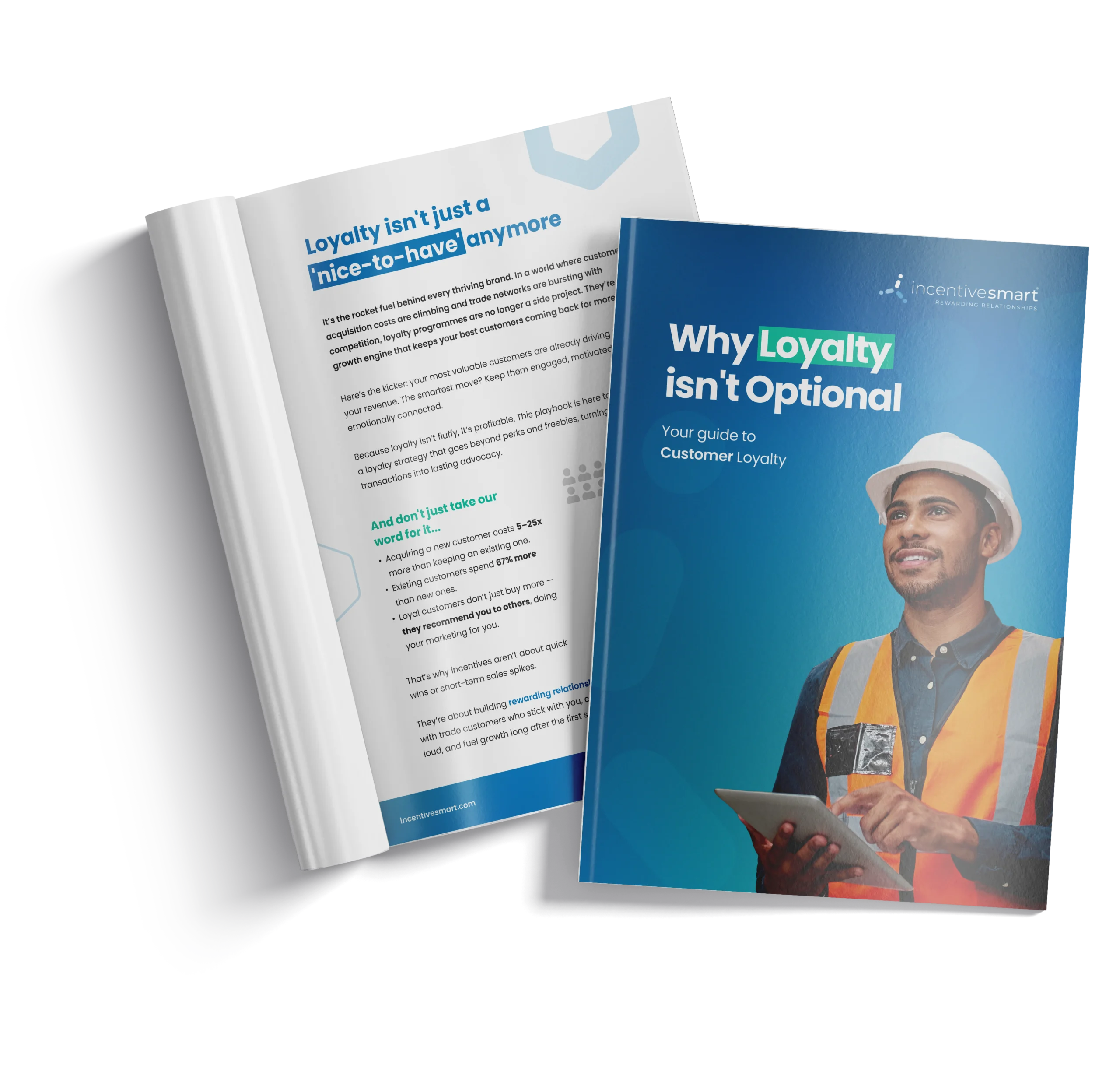
If you’re serious about turning customer loyalty into a real growth engine, not just a buzzword, then you’ll love our latest guide. It’s packed with practical steps, examples, and insights to help manufacturers and builder merchants build a loyalty strategy that actually works (and stands out from everything your competitors are doing).
The Manufacturer’s Guide to B2B Customer Loyalty
Your playbook for real loyalty, smarter rewards, and repeat revenue.